

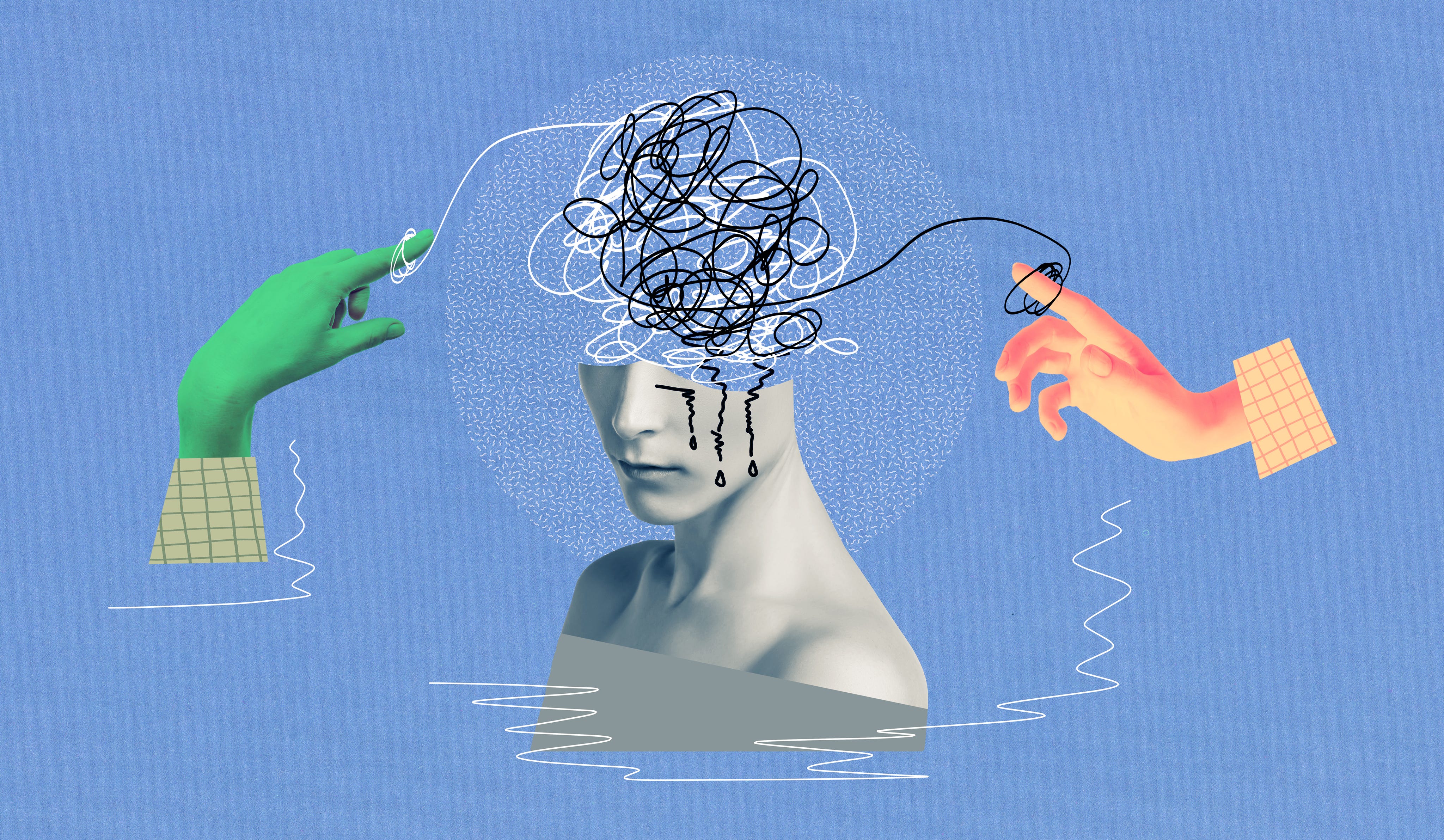
If you live in New York City, it is not unusual to meet someone who has been in talk therapy for over a decade. “I started in my twenties after my dad died and just kept going,” explained Rob. For years, he had a standing appointment at 6pm every Tuesday with Dr. M. “It was like a reserved parking space in a garage,” he fondly recalled. “That hour was for me to talk about me.” Now 40, Rob came to see me because Dr. M recently retired and moved to Florida and he was in search of a new therapist.
During our initial consultation, Rob talked about the stress of having two kids under the age of ten and some challenges at work but nothing that wasn’t manageable. He and his wife bickered sometimes but overall had a loving and supportive relationship. There was no evidence of depression or an anxiety disorder nor was there a history of a serious mental health issue. One of the biggest stressors in his life was time. Or more accurately, the feeling of not having enough of it—to finish work, to be with his family, to exercise, to see friends.
What I told Rob surprised him. I explained that I didn’t think he needed ongoing treatment. My door would always be open if something came up, but I didn't believe that spending an hour each week on a therapist's couch was necessarily the best use of his time. The stress he described in his life was normal, natural, and he seemed perfectly capable of handling it. Why not use that extra hour to have an early dinner with his family or catch up with a friend or go for a walk in the park? Rob was taken aback by my suggestion. Treatment had become a part of his weekly routine, a sacred block on his Tuesday schedule. It never occurred to him to stop.
Therapy Is a Tool, Not a Lifestyle
Rob’s story is not unique. People typically start therapy for a specific reason and tend to continue long after the issue has been resolved. While therapy can be helpful, in my experience it is most effective as a tool to help navigate a challenging situation. Except in rare cases, treatment doesn’t need to last forever.
As Weill Cornell psychiatrist Dr. Richard A. Friedman wrote in an article in the Atlantic entitled Plenty of People Could Quit Therapy Right Now, talk therapy is not designed for long term use. The point of therapy is to learn the skills to feel and function well enough on your own.
I often say that my goal with patients is to put myself out of business—in other words, for them to get to a place where they feel self-reliant and confident dealing with the ups and downs of their daily lives. I do not know of any evidence showing that being in treatment “just because” is helpful, unless of course there is a complex mental health disorder. There is even reason to believe that in the absence of acute symptoms, talk therapy might do more harm than good.
As Friedman observes,
“Excessive self-focus—easily facilitated in a setting in which you’re literally paying to talk about your feelings—can increase your anxiety, especially when it substitutes for tangible actions. If your neurotic or depressive symptoms are relatively mild (meaning they don’t really interfere with your daily functioning), you might be better served by spending less time in a therapist’s office and more time connecting with friends, pursuing a hobby, or volunteering.”
Put simply, instead of talking with a professional on a weekly basis about what’s bothering you, engaging in tangible actions that align with your values may be a more reliable way to give yourself a boost.
What Actually Improves Mental Health?
A recent study of over 600 adults identified 15 everyday mentally protective behaviors that improve wellbeing, no couch time required.
Visiting family
Spending time in nature
Participating in physical activity
Getting together with friends or work mates
Attendance at community events
Contact with informal/formal groups
Attendance at large public events
Doing challenging activities
Influence of religion
Involvement in cause-related groups
Volunteering
Engaging in spiritual activities
Doing activities that require thinking or concentration
Talking or chatting people with people outside your home (including online)
Helping others
These activities are more than just feel-good suggestions. They’re evidence-backed pathways to resilience.
A Little Therapy Can Go a Long Way
To be clear, I am not anti-therapy. I am anti-therapy culture. I believe therapy works best when it is targeted and purposeful.
For example, Cognitive Behavioral Therapy (CBT)—the gold standard for anxiety and depression—is a goal-oriented, short term treatment typically lasting between 10 and 20 sessions.
There is also evidence that just one meeting with a therapist can be effective. One study found that a single solution-focused session was associated with improvements in hopelessness, agency, and psychological distress.
In other words, a little therapy can go a long way to helping a person feel better. It does not require the time, cost, and potential pitfalls of ongoing “just because” treatment.
Beginning or Ending Therapy: Questions Worth Asking
If you are starting treatment for the first time, be clear about your goals, inquire about expected length of treatment and track your progress.
If you have been in therapy for a long time and have not had any symptoms for over 6 months, it might be time to take a break. Here are a few questions to consider:
Have I met the goals that brought me to therapy? What have I achieved in therapy, or what specifically has changed in accordance with my goals?
What key changes can I identify in myself, my life, and my relationships that suggest I’ve grown through therapy?
Why am I thinking or feeling that this might be a good time to end therapy? Is my assessment based on feelings in the moment, or a more continuous and overarching feeling of readiness and progress towards my goals?
What support might I need to continue my positive change, growth, and development after I end therapy?
Wellbeing Is Built on Action, Not Analysis
A friend told me that he was in therapy because he takes his mental health seriously. I’ve also heard about singles who say that being in therapy is a prerequisite for potential partners.
This logic seems flawed to me. The assumption that therapy is the only signal of an emotionally balanced person and the only route towards wellbeing misses what I believe to be the secret ingredient of mental health: relationships with others.
There are many ways to be serious about your mental health and to signal to others that you are serious about your mental health. Instead of asking “are you in therapy?” say “tell me about the people in your life you are close to.” A person’s answer will tell you a great deal about who they are.
The paradox of modern therapy culture is that in our quest to understand ourselves, we may be missing the very thing that makes us whole: genuine connection with others and purposeful engagement with the world around us. Sometimes the best way to get out of your head is to get into the world.
Hello Dr Boardman!
I’m a seasoned integrative psychotherapist in NYC (LCSW-R) and love your sub stack blogs!
This one, however — though I largely agree with many of the points you make — neglected to look at some of the very real benefits, however small or sizable, of longer term work. Especially in these post-COVID, extremely divisive and challenging times in our country and the world. From my perspective, sitting down once a week with someone who knows you well, understands your history and current daily life experiences — particularly here in frenetic NYC — can be an oasis of sorts. A place to slow down and reflect/review/discuss anything in a contained space with someone outside every other social circle. I have found this to be tremendously helpful in my own long term work with my therapist, as well as how helpful even a basic “check-in” session some of my clients describe. Is it critical and specific to problem-solving? Not always. But nevertheless can provide needed support and time to reflect that is too often missing in today’s over-working culture.
All that said, I do agree that it isn’t *always* in a client’s best interest to continue therapy ad infinitum…but not without merit for many.
Thanks so much for your thoughtful writings!
Very good article! I have a friend who has made thinking about and working on his mental health his main hobby in the past 5 years or so. Every time I see him he talks about therapy and mental health. He has tried probably eight medications and sees three different therapists. He always talks about how he is working on his trauma almost as something that runs through all human relations and exists in an ambient sense in the world, but he does not have any traumatic events in his personal history. He has one of the most frictionless lives of anyone I know but is prone to bouts of a sort of self-imposed isolation.
He seems convinced that the correct combination of drugs and talking about himself will make him feel fulfilled, but I think that this excessive self focus has contributed to his anxiety and depression, like what you described in the article. I think joining a men’s basketball league at the Y would be 100x more effective than spending 3-5 hours trying to process his emotions. Therapy is a tool to help you build better thought patterns, coping mechanisms, and behaviors, but it really does feel like a lot of people see therapy as Mental Health itself.